


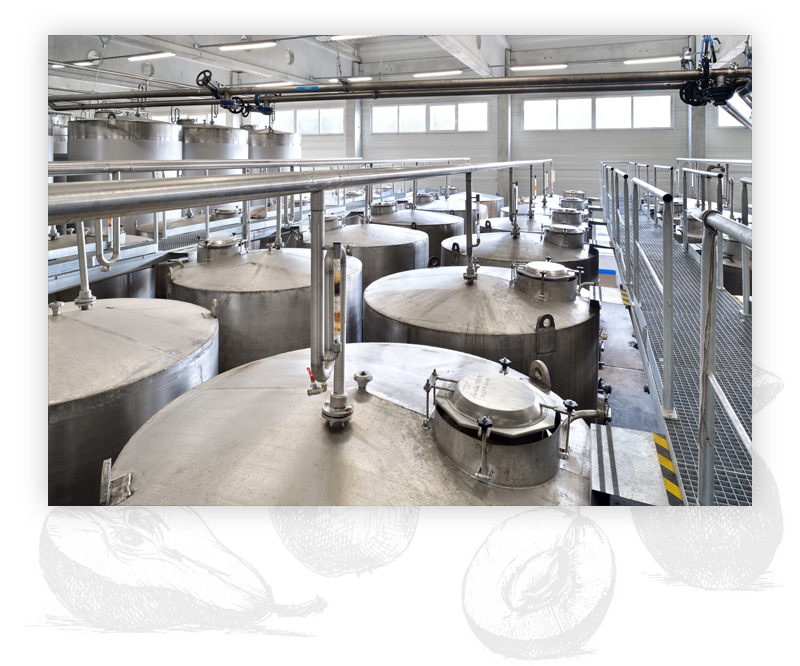
The main raw ingredient for fermentation is ripe fruit, which is transported via a screw conveyor into a grinder. That breaks up the fruit to make fermentation easier, but without crushing the pits. Then it is pumped into fermentation tanks where fermentation takes place.
Alcoholic fermentation is a process during which yeast transforms sugars into alcohol. This transformation of sugar into alcohol is accomplished by yeast enzymes, with byproducts of carbon dioxide and heat. The fermentation process ceases at temperatures below 10 °C and it proceeds faster at increased temperatures; however it is better to ferment slower – 15 °C is generally considered the ideal temperature, which should be maintained throughout the entire process. Alcoholic beverages created via natural fermentation contain only about 14% alcohol by volume. To attain a higher alcohol content, distillation is necessary.
Multiple distillation yields a distillate (70–75%), which must then be diluted before bottling.
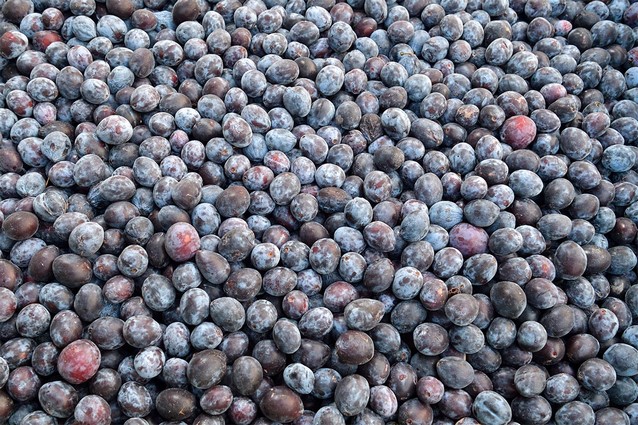 Only ripe and pure fruits come into production
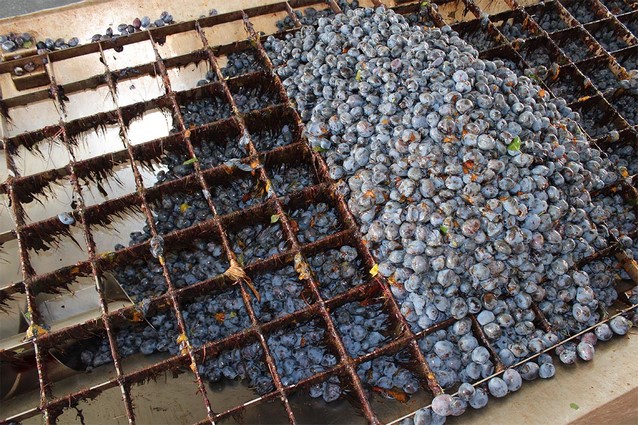 Transport of fruits for processing
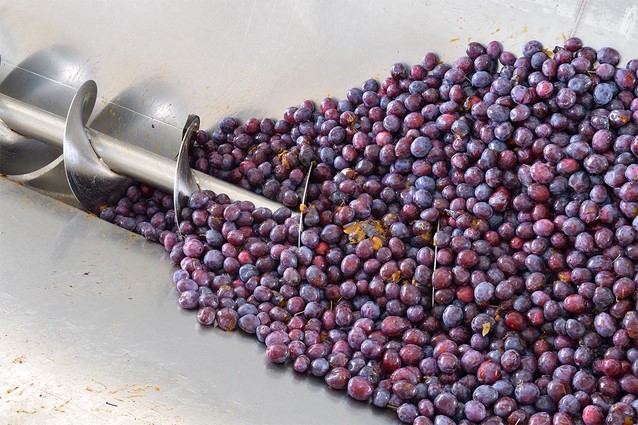 Screw conveyor
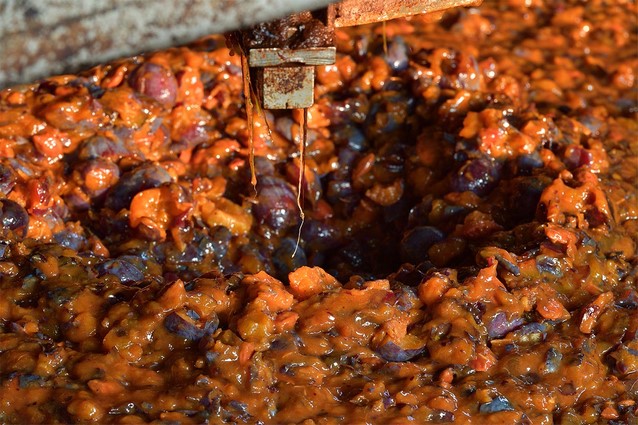 The grinder disrupts fruits to facilitate the fermentation process
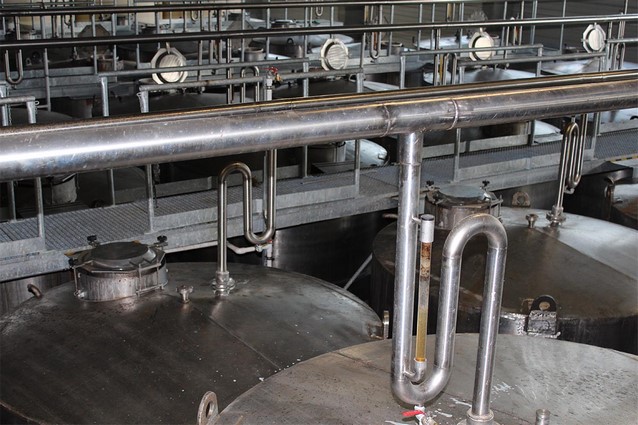 The Fermentation tank and the fermentation plug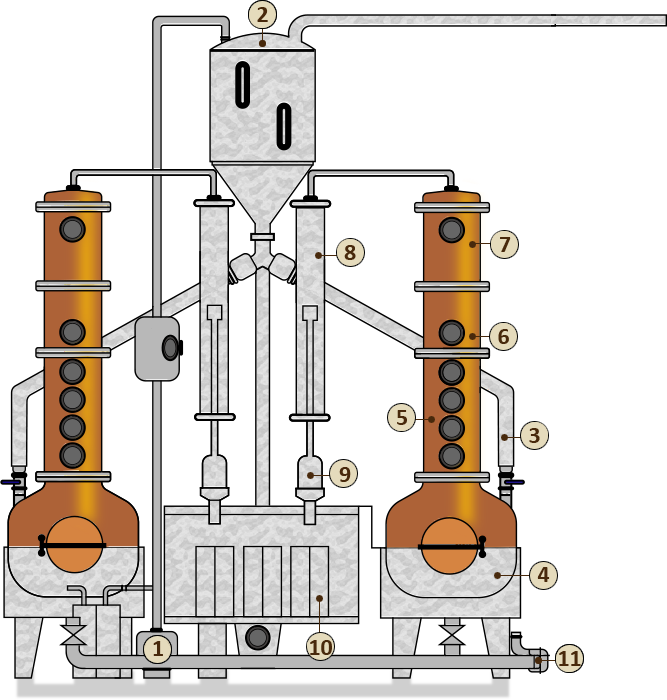
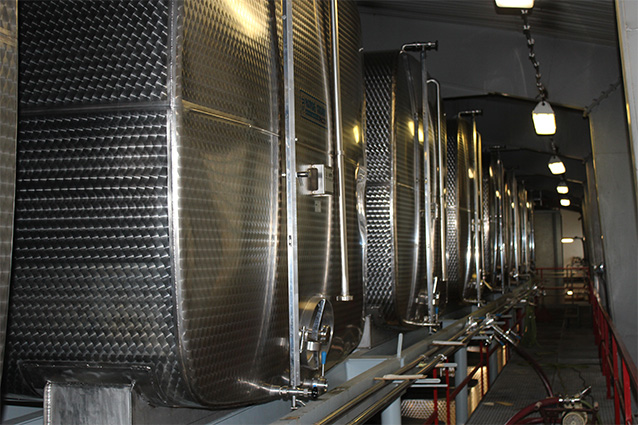 Stainless steel tanks for ageing spirits
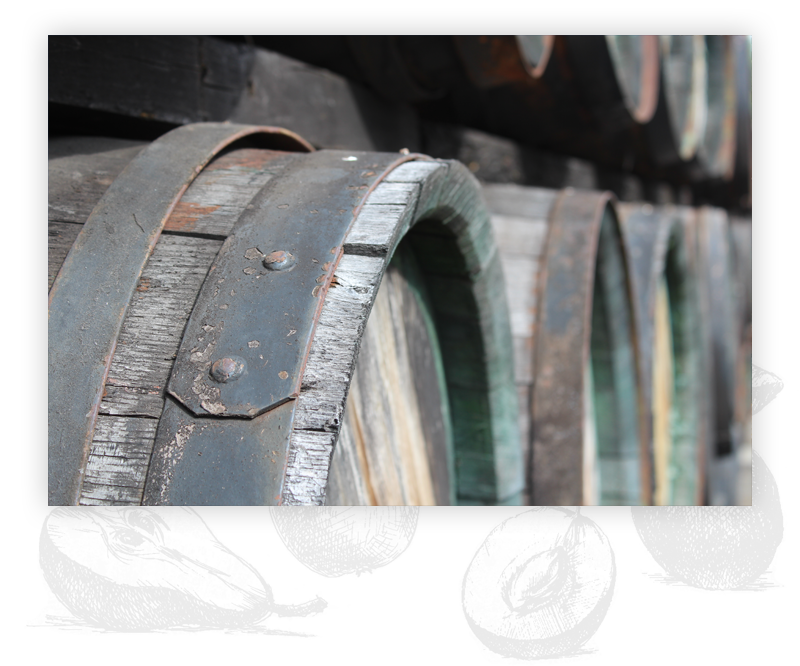
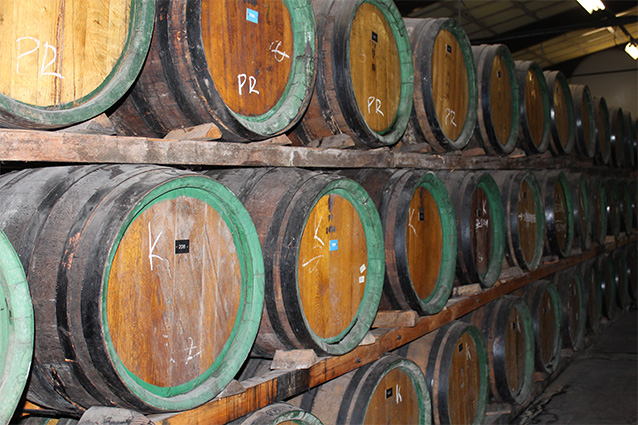 Golden slivovitz ages in oak barrels
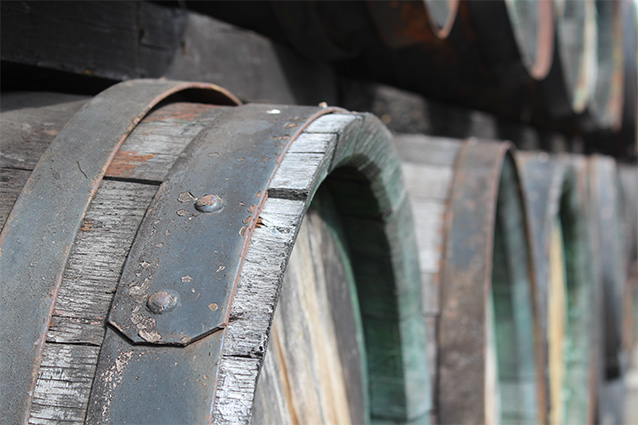 The capacity of the wooden barrel is about 300 l
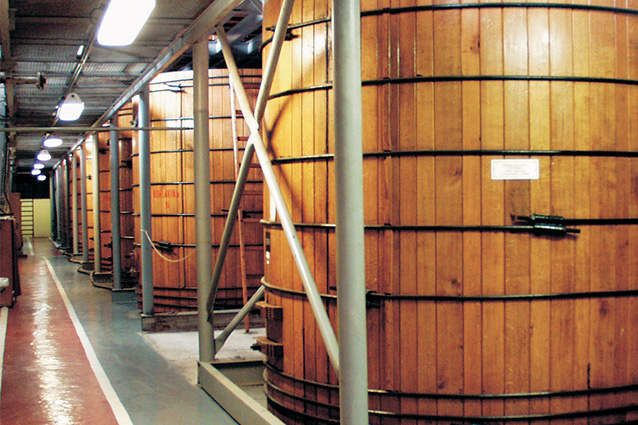 Today giant vats serve as a viewing platform within the excursion route
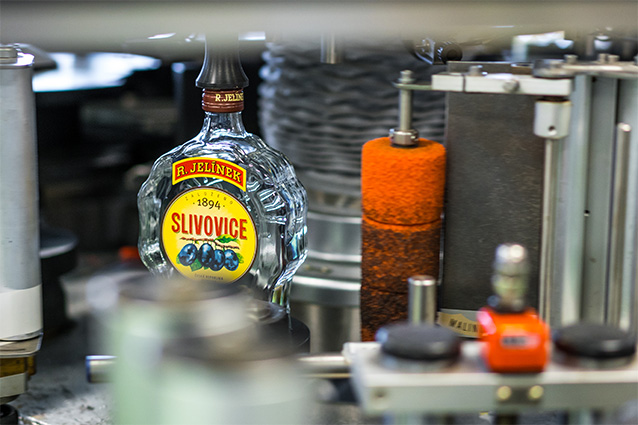 Product labeling – on the line
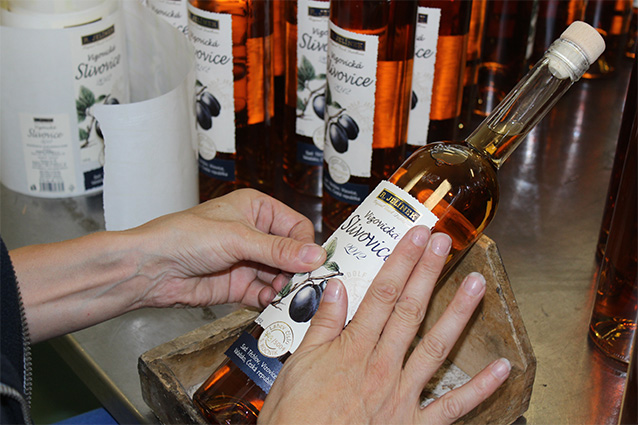 Labeling of the final product - manual
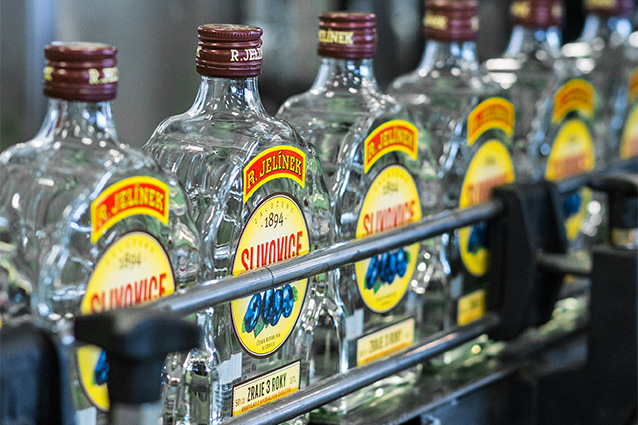 The bottling line
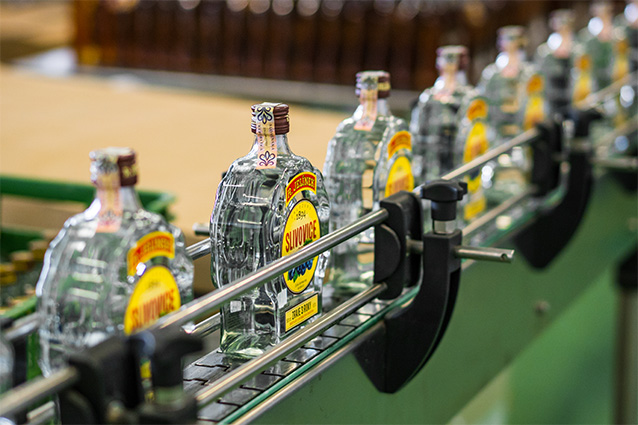 The Final product with excise stamp
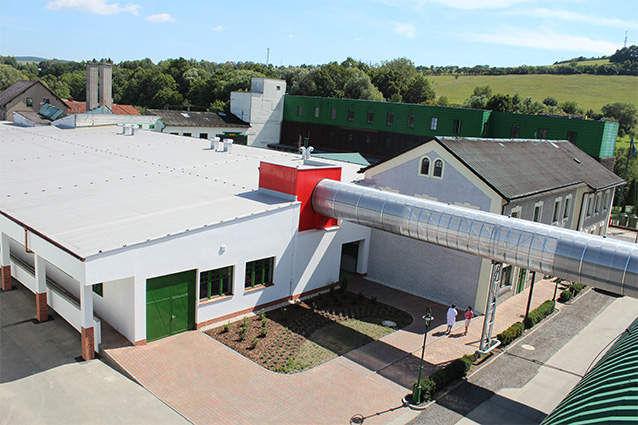 Using the tunnel, cartons with finished products are transported to the shipping warehouse





Copyright © 2019 - RJELÍNEK. ALL RIGHTS RESERVED.